Prologue
Anthropic is the most-watched and least-understood company in AI. This book is written from the inside out.
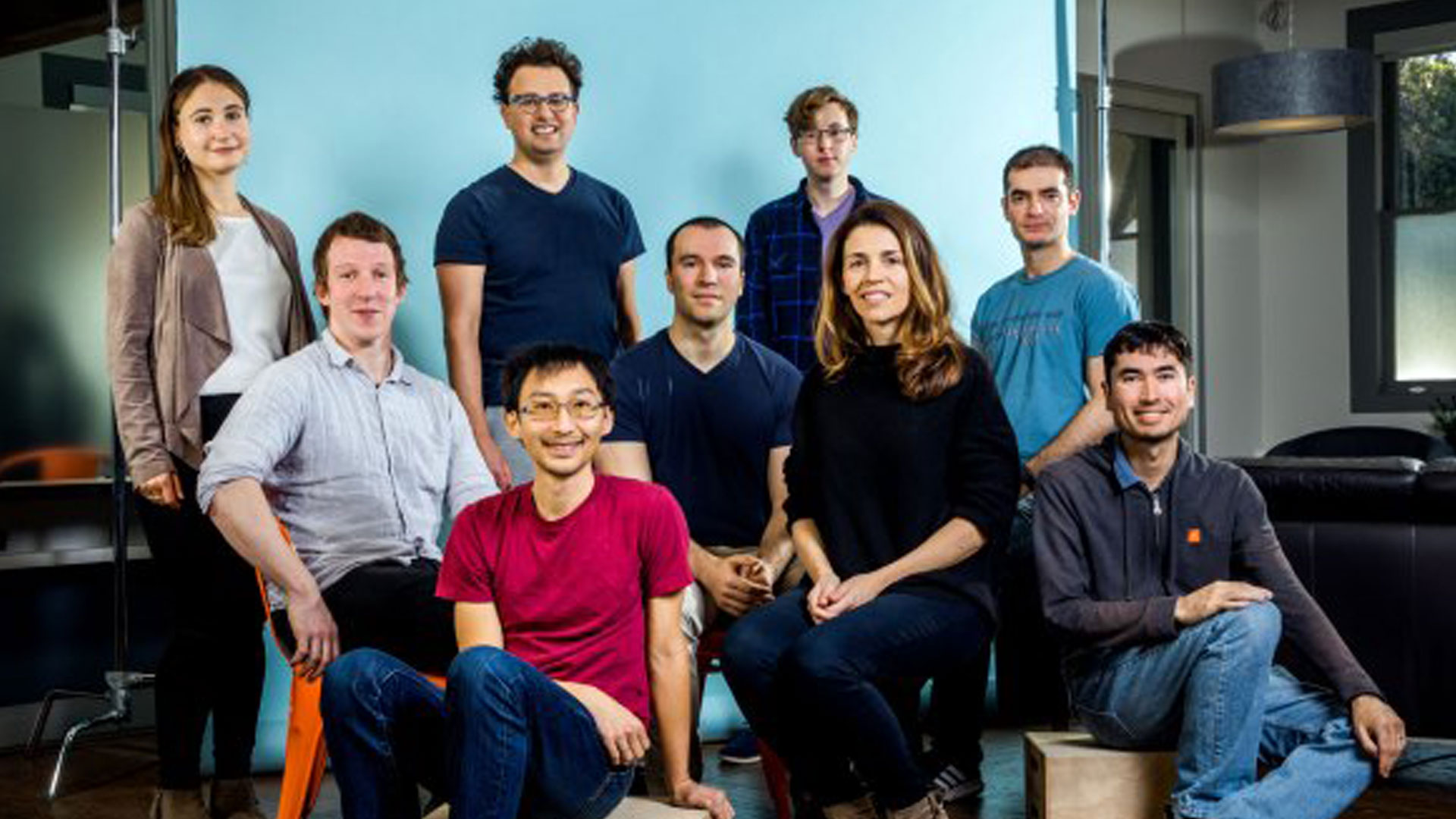
Anthropic is the most-watched and least-understood company in artificial intelligence. Not because the company is secretive — it publishes more about its internal reasoning than any other frontier lab — but because the story the press tells about it is structurally incomplete. The incomplete version is not wrong exactly. It is true that eleven people left OpenAI in 2021 over safety concerns. It is true that the company raised $7.3 billion from Amazon and Google while claiming to believe it might be building one of the most dangerous technologies in history. It is true that Claude is the model most practitioners reach for when they want something careful. All true. All insufficient.
The insufficient version misses what is actually interesting: that Anthropic is not primarily a story about AI risk. It is a story about institutional architecture — about whether the specific legal structure, governance design, research culture, and talent composition of an organization can function as a safety mechanism in a domain where the conventional mechanisms don't apply yet. The company is an argument made in the form of an institution. To understand the argument, you have to read what the institution has produced.
Most people haven't.
What the secondhand version misses
Anthropic's public documents are extraordinary and rarely read. The Responsible Scaling Policy — the commitment that specifies, in advance, what capability thresholds will trigger deployment pauses — is not a press release. It is a detailed governance instrument that names specific tests, specific mitigations, specific obligations. The model spec is not a values statement. It is a 40,000-word specification of the principles Claude is trained against, with the reasoning behind every major decision laid out in prose a non-specialist can follow. The Constitutional AI paper is not a PR move about safe AI. It is a technical argument about the failure modes of RLHF and a proposed remedy, with the remedy's costs stated as clearly as its benefits.
These documents exist. They are public. The secondhand version of the Anthropic story treats them as supporting material — background, color, evidence of earnestness. The primary-source version treats them as the story. They are the load-bearing structure of everything Anthropic has built, and you cannot understand what the company is doing — or how it might fail — without reading them as argument rather than marketing.
This book reads them as argument.
The corpus and the contract
Over the past twelve months, I built a research corpus of 727 documents — deep-research sessions with Gemini and Claude, sustained across every major development in the company's arc: the founding, the Constitutional AI paper, the Responsible Scaling Policy's first and second versions, the interpretability program's early results, the MCP release, the Claude Code launch, the Amazon and Google investments. Each session went long enough to generate the kind of analysis that doesn't survive the compression of a news cycle. The sessions accumulated. The corpus now spans roughly 1.4 million words of structured research.
Every quoted passage in this book exists as a verbatim substring of a real document in that corpus. This is not a rhetorical claim — it is an operational constraint. The retrieval system I built enforces it: if a phrase can't be returned by a vector query and verified as a substring match, it doesn't appear between quotation marks. Paraphrase is marked as such. Attribution is inline. The reader can distinguish what was written in the research corpus from what is my editorial voice connecting it — because the visual register distinguishes them, and because the methodology chapter explains how the verification works.
This constraint is the book's trust mechanism. It is also, as the final chapter explains, the proof-of-concept for something larger.
What this is not
Not a critique. Not an exposé. Not a defense.
Anthropic has critics with legitimate arguments, and the book does not pretend otherwise. The open questions chapter names the tensions the corpus couldn't resolve: whether the governance structure that made sense for an 11-person company holds at 500 people and $7 billion; whether interpretability will scale to frontier models before the frontier models require it; whether the Amazon and Google investments have quietly replicated the commercial dependency the founding was meant to avoid. These are not answered. They are named precisely, which is the best an honest treatment of a live situation can do.
The book is also not exhaustive. Anthropic has published hundreds of papers. The corpus covers the structural arguments and the company's self-understanding at key moments — it does not attempt to index every research contribution. What it covers, it covers in depth.
Who this is for
Anyone trying to understand the field by understanding one of its three most consequential companies. Founders triangulating Anthropic's institutional design against their own. Investors trying to read the doctrine as a thesis — to understand whether the RSP is a moat or a constraint, whether the safety posture is differentiation or liability. Practitioners following the technical lineage from Olah's circuit-level interpretability work through Constitutional AI through the scaling laws that made the roadmap legible. Anyone who has felt that the secondhand version of this story is missing the argument.
The 30-second version
Anthropic is what happens when a doctrine becomes a company. The doctrine predates the company — it runs back through the OpenAI safety team, through Olah's mechanistic interpretability work at Google Brain, through Kaplan's scaling laws, through a specific cohort of physicists who decided that machine learning was the structural problem of their careers. The company is the doctrine's load-bearing instantiation. It is funded to survive long enough to find out whether the doctrine is correct.
That is the question the book sits with. Not: is Anthropic right about AI risk? But: has it built an institution capable of acting on its own commitments when the commitments become expensive?
The source material, organized, is below. The methodology — and the retrieval architecture that made verbatim sourcing at this scale possible — is in the final chapter. Read straight through, or skip to the coda if that's why you came.