The OpenAI Schism
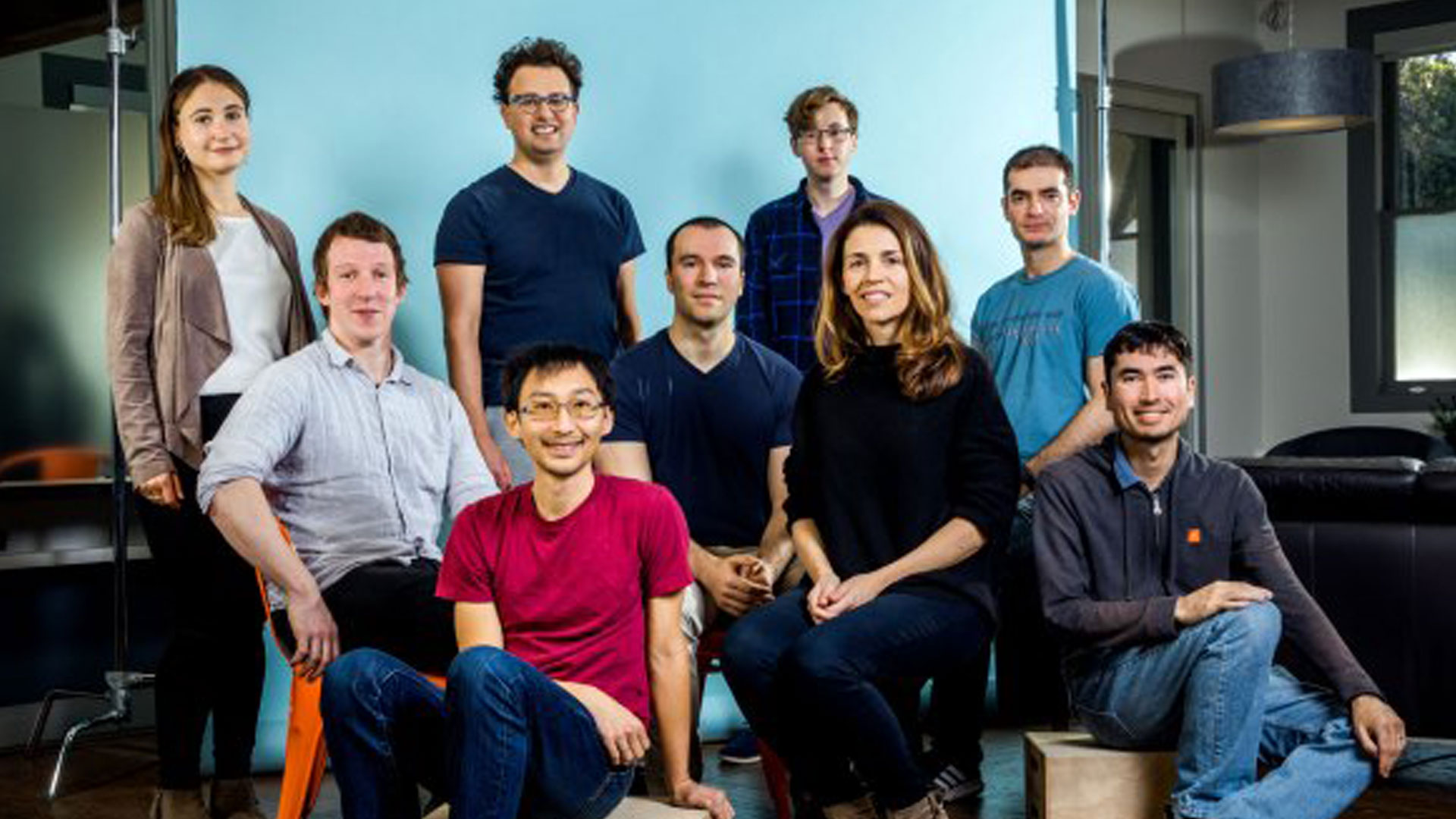
The Anthropic founding was not a personality conflict that became a company — it was an argument about organizational structure that eleven people were willing to stake their careers on.
The standard account treats the 2021 departure of Dario Amodei, Daniela Amodei, and nine colleagues from OpenAI as a falling-out — interpersonal friction, competing visions, the usual founding mythology. This framing is both convenient and wrong. What the safety team believed, and what the evidence from the corpus supports, is that OpenAI had made a structural choice — about governance, about the relationship between safety research and product timelines, about what kind of institution was appropriate for building systems of this consequence — and that the choice was irrevocable from the inside.
Eleven people leaving is a signal. Not about any individual's character. About what the institution had decided to optimize for, and whether the remaining architecture could correct for it.
Their departure was not a collection of individual career moves but a unified, mission-driven decision rooted in these "directional differences". As Dario Amodei later explained, the founding group shared a "very strong focused belief in two things." First, they were among the earliest and strongest believers that scaling laws would continue to yield exponentially more powerful models. Second, and more importantly, they believed that "you needed something in addition to just scaling the models up, which is alignment or safety". They felt this dual focus was being lost at OpenAI.
The proximate cause has been written about extensively. The deeper cause is structural. OpenAI in 2019–2021 was navigating a fundamental tension: it had been founded as a nonprofit safety research organization and had transitioned to a capped-profit structure to access the capital compute-scale research requires. The "capped profit" framing was meant to hold the mission in place. What the departing team concluded — or at least what the logic of their departure implies — is that the cap was not load-bearing. That the commercial incentives and the safety commitments were in a relationship that the cap was insufficient to govern.
What they took with them was not a set of papers or a research direction. It was a theory of what kind of organization alignment research requires. The theory had three components: that safety had to be the mission, not a constraint on the mission; that the governance structure had to be able to hold that commitment under commercial pressure; and that the research culture — who you hired, what you built, how you decided — had to be consistent with the mission at the level of daily practice, not annual reports.
Daniela Amodei articulated the reason for leaving in starkly principled terms: "We left OpenAI because of concerns around the direction. We wanted to be sure the tools were being used reliably and responsibly. We want to be the most responsible A.I. we can, always asking the question, 'What could go wrong here?'" This was not about building faster; it was about building better, and safer.
Daniela Amodei's role in the founding is the most underdiscussed structural fact about the company. In accounts of technical AI labs, the operator — the person who builds the institution rather than the models — tends to be treated as secondary. This is almost always a mistake, and it is a mistake with Anthropic. Dario's technical and scientific credibility is what gives the company its research identity. Daniela's operational judgment is what makes the institution capable of executing on it. The founding required both. The eleven people who left understood that a values-based lab without operational discipline would not survive long enough to matter.
Daniela Amodei, serving as President, was instrumental in operationalizing this "safety-first" culture. Unlike typical startups that rush to find product-market fit, Anthropic spent its first 18 months in stealth, focused purely on the science of alignment. Daniela Amodei's background—spanning risk management at Stripe and safety policy at OpenAI—allowed her to construct a unique organizational DNA. She implemented a rigorous "mission alignment" filter for hiring, often turning away top-tier technical talent if they did not resonate deeply with the company's safety-oriented mission.
The question of what the founders were fleeing versus what they were building is a false dichotomy. They were fleeing a governance structure they believed was inadequate — and they were building a specific alternative. The alternative was not just a safety-first culture. It was an institution designed so that safety commitments were structurally enforced, not culturally encouraged. The difference matters. Culture can be changed by the next hire, the next funding round, the next product deadline. Structure is harder to erode. The bet was that a structure-first approach to the mission would hold under pressures that a culture-first approach would not.
Editorial aside: The corpus contains multiple documents interrogating this bet from the other direction — asking whether Anthropic's structure has in fact held under pressure, or whether the $7.3B raised from Amazon and Google has functionally replicated the commercial dependency the founding was meant to avoid. The open-questions chapter takes this up directly.
Whether this theory of institutional design was correct is still being tested. Anthropic has raised more money than any safety lab in history, from strategic investors with obvious commercial interests in the company's success. The structure has been subjected to exactly the kind of pressure it was designed to withstand. The results are, at minimum, ambiguous.
What is not ambiguous is the nature of the founding wager. It was not about who was right about AI risk, or who had the better research agenda. It was about whether the institution housing the research was capable of making and keeping commitments — commitments that would remain binding when they became expensive.
The institutional wager required a technical one: that there was a way to build capable, commercially viable AI systems and make them safer simultaneously, not in sequence.
The founders left with a governance theory — but governance without a technical method is just a mission statement, and the field already had enough of those.