FounderFiles·N°064·Defense · Capital · Policy
2003 —
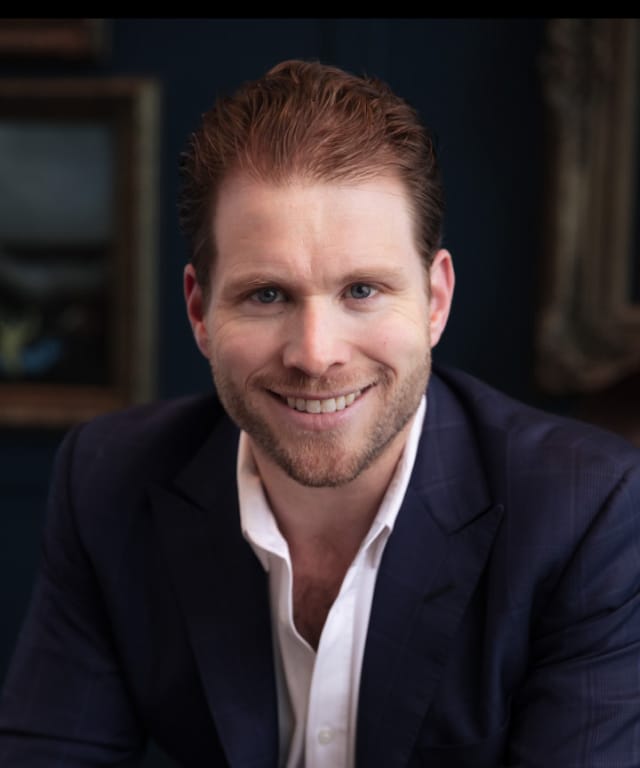
Subject·Joe Lonsdale·Co-founder, Palantir · Founder, 8VC · Chairman, Cicero Institute & University of Austin · Host, American Optimist
Joe Lonsdale
The Palantir co-founder who recruited the engineers, then left to write the rules.
He was twenty-one when he started hiring the engineers who would make a philosopher’s software company work. Two decades later he funds the defense stack, drafts model state laws, chairs a university, hosts a podcast, and owns a piece of the AI lab his old company was caught between. His recurring question has never been whether to build the machine. It is who gets to write its rules.
Credentialed by a network, not a degree
He grew up in Fremont, California, studied computer science at Stanford, and graduated in 2004. The formative credential was not the degree. It was The Stanford Review, the conservative student paper Peter Thiel co-founded, which Lonsdale edited in 2002–03 and later called one of the most important experiences of his time there.
Review alumni at PayPal got him an internship. From there he became one of the first employees at Clarium Capital, Thiel’s hedge fund, and in the account Puck gave in 2021, Thiel’s longtime right-hand man. He is often filed under the PayPal Mafia. He never ran anything at PayPal. What he took from it was proximity, and a mentor who funded his first company.
That company began as a recruiting failure. By Lonsdale’s telling, he tried to hire his smartest friends into Clarium, they found finance dull, and the effort to give them something worth doing became Palantir.
Two hundred engineers for a philosopher
Thiel paid for a 2004 prototype built by Lonsdale, fellow Stanford student Stephen Cohen, and ex-PayPal engineer Nathan Gettings. He hired his Stanford Law friend Alex Karp, a philosophy PhD with no engineering background, as CEO. The company was incorporated in May 2003; the team and the prototype came together in 2004.
Neither man has said Lonsdale made Karp viable. Their descriptions of the work show a clean division of labor anyway. Karp read institutions and closed deals; Lonsdale credits him with getting the FBI and CIA to move. Lonsdale ran recruiting and pushed product strategy. He says he personally hired most of the first two hundred employees, a figure that is his own and has not been independently confirmed.
He has described the machine in detail. Recruiting teams at about twenty universities. Scouts at programming contests. A menu of three salary levels against three equity levels, with the best candidates, he says, choosing the low salary. Tables showing what shares would be worth at a $5 billion valuation, which recruits called ridiculous. Raids on rivals, including interviews held in an eBay conference room. Every early hire needed the approval of all four non-Thiel founders.
“The company wouldn’t exist if it weren’t for me.”
The money came slowly. In-Q-Tel put in about $2 million, later bought back at a profit to the agency; Thiel and his fund covered most of a roughly $30 million startup cost. About three years in, Lonsdale says, the company came close to dying. The read this file takes: Lonsdale built the engineering bench that let a non-technical CEO sell to the government. In 2009 he left day-to-day work, saying the defense business was too stressful, and started Addepar. He kept an advisory role and a stake Forbes put near 1%, about $1 billion, in November 2024.
Watch the watchers
Thiel named the company after the seeing-stones in Tolkien. In his 2019 letter Lonsdale read the name as a warning, a reminder that the tool could be misused. He wrote that the founders agreed early to build transparent rules and audit trails so users could watch the watchers, and that they stood up a civil-liberties team before most startups had a legal department.
In March 2026, defending Palantir on the podcast circuit, he described it as a rules engine rather than a holder of data, and said the government should decide policy. Those two claims are the seed of everything after. A system encodes rules. Someone accountable writes them. The software keeps a record of who did what.
VCs are pretty lazy
After Palantir he kept founding instead of picking. Addepar (2009, with Jason Mirra) became wealth-management infrastructure; he was CEO until 2013 and remains chairman. OpenGov (2012, with Zachary Bookman) built budgeting software for governments; Cox Enterprises took a majority stake at a $1.8 billion valuation in February 2024. Formation 8 (2011, with Jim Kim and Brian Koo) backed Oculus and Wish, then split in November 2015 without raising a third fund.
That year also brought a lawsuit from a former Stanford student he had mentored, alleging abuse during a 2012–13 relationship. He denied it and countersued. Both suits were dropped on November 2, 2015. Stanford lifted his campus ban, saying new evidence showed no Title IX violation, and kept a finding that he broke its relationship-disclosure policy along with a mentoring and teaching suspension.
8VC grew out of the Formation 8 split. It moved to Austin in November 2020 and closed its largest fund, $1.5 billion for an “American AI Industrial Revolution,” on July 3, 2026. Roughly 30% of the firm’s effort goes into its Build program, which has started more than twenty-eight companies in-house, Epirus among them. A partner recalls the reasoning in four words: VCs are pretty lazy.
From audit trails to statute books
The Cicero Institute, which he co-founded with his wife Tayler, writes model legislation. Cicero Action counts 195 of its bills signed into law; the Washington Post counted about 214 laws promoted across 29 states since 2021. Its homelessness model is on the books in some form in 15 states, and Cicero staff helped shape Trump’s July 2025 executive order on homelessness. In Texas he pushes automatic expiry dates for regulations.
The University of Austin, announced in November 2021 with Bari Weiss, Niall Ferguson and Pano Kanelos, applies the same instinct to a campus. Politico reported that in April 2025 he told faculty to subscribe to a set of anti-communist, anti-socialist and anti-identity-politics principles.
His politics moved fast in the same period. In April 2024 he called himself pretty moderate socially. By July 2024 the AP reported he was helping lead Elon Musk’s pro-Trump America PAC, with $1 million from his company. In July 2025 he funded a privately staffed team of AI engineers inside the FDA. In December 2025 he drew wide criticism for X posts calling for public hangings of repeat violent offenders and a return to masculine leadership.
Rules engine, then rule writer.
Read as one career, the ventures climb a ladder. Code that encodes rules. Capital that picks who builds. Statutes that bind states. A university and a podcast that shape who believes what. At each rung his answer to the question of authorship is the same: builders build, elected government sets policy, courts punish harm after the fact, and incumbents do not get a veto.
- CultureUATX (2021, founding chair) · American Optimist (2021, podcast)
- StatuteCicero Institute — model state laws, 195 bills signed (Cicero’s own count)
- CapitalFormation 8 (2011) → 8VC (2015) · Fund VII $1.5B, 2026
- CodePalantir (2003–04, audit trails) · Addepar (2009) · OpenGov (2012)
Left meets right at liability
The Palantir founders are usually treated as one bloc. Lonsdale and Karp now hold close to the same positions on defense, immigration and campus culture, and arrived from opposite ends. Karp is a Habermas-trained former socialist who still called himself a card-carrying progressive in June 2026 and says the parties moved, not him. Lonsdale started on the right at the Review. In 2019 he placed Karp on the intellectual left himself. No public disagreement between them was found for 2020–2026; the split shows in parallel statements.
| Issue | Karp | Lonsdale | Read |
|---|---|---|---|
| Origin | Former socialist; Clinton voter, Biden donor; “card-carrying progressive” (CNBC, June 2026) | Stanford Review conservative; Koch-network donor; America PAC, 2024 | Opposite starting points, convergent votes |
| Why Trump | Two issues: immigration and deterrence | A broad agenda: taxes, deregulation, homelessness, anti-communism | Karp’s support is narrow; Lonsdale’s is total |
| AI labs & the state | Predicts the labs will be nationalized; wants civil and criminal penalties (2026) | Labs’ policy push is “very dangerous”; no oligopoly over policy (Reuters, Sept 25, 2026) | The sharpest split |
| Liability | You are liable for your own actions | Strict liability for labs, no Section 230-style shield (CNBC, Sept 22, as summarized) | Where they meet |
| Lab red lines | Favors limits on domestic use that companies self-impose; DoD needs wide license abroad | Government should decide policy on surveillance | Karp tolerates vendor limits more readily |
| Autonomous weapons | AI weapons are this generation’s atomic bomb (2023) | “There’s always a person responsible” (Sept 2026) | Shared hawkishness, different emphasis |
| The West | Argues it in a book: The Technological Republic (2025) | Builds institutions for it: UATX, Cicero | Same diagnosis, different instrument |
Liability is where their AI views meet. Nationalization is where they part. The founder the Valley treats as the hard-right flamethrower is the one arguing to keep AI labs private and answerable in court. The self-described progressive is the one predicting the state will absorb them.
Read the companion file: Alex Karp →
Proud investor, very dangerous
On September 25, 2026, at a Reuters event in Austin, Reuters described him as a small investor in Anthropic. He said he was proud to hold the stake. In the same appearance he said what OpenAI and Anthropic are pushing on policy is very dangerous, and that the country does not want an oligopoly controlling its rules. Three days earlier, per write-ups of a CNBC interview, he called Dario Amodei the right leader for Anthropic, rejected doom framing, and asked for strict liability instead.
“I’m proud to be an investor in Anthropic.”
The context is his old company. Claude reached defense and intelligence customers through Palantir’s platform on AWS, announced November 7, 2024. When Anthropic held two red lines, no mass domestic surveillance of Americans and no fully autonomous weapons, the Pentagon designated it a supply-chain risk and Palantir had to pull Claude from Maven. Palantir’s CTO Shyam Sankar later said the company had been stuck in the middle, and that the Pentagon’s Claude had already been replaced. Across that whole arc, this file found no on-record statement from Lonsdale.
He did not speak. He gave Anthropic his microphone instead. Episode 164 of American Optimist, published October 2, 2026 and recorded about a month earlier, before the D.C. Circuit ruled, hosted Sholto Douglas and Nicholas Marwell of Anthropic’s RL and long-horizon teams. He put the regulatory-capture charge to them directly. Per the one available write-up, Marwell answered that the slower rollout cost Anthropic revenue, and Douglas said the company had slowed itself more than anyone else. He asked whether San Francisco would remake the world without regard for family, faith and tradition. They answered that ritual and local community should matter more as work matters less.
He sits where every interest in the fight crosses: Anthropic shareholder, Palantir co-founder and adviser, defense-tech investor, Trump-world donor, floated for a Pentagon post. Any statement would cost him with someone. His own doctrine, that elected government writes the rules, would seem to side with the Pentagon against Anthropic’s red lines. He owns the stock, backs the CEO, and stays quiet. That silence is where the rules engine meets his own portfolio.
Sourcing: the Reuters remarks are syndicated wire copy. The Sept 22 CNBC remarks come from aggregator summaries. Ep. 164 has no public transcript; detail comes from a secondary summary. The size, date and vehicle of the Anthropic stake are not public.
- 2002–03Editor, The Stanford Review. Then PayPal intern; early employee at Thiel’s Clarium Capital.
- May 2003 / 2004Palantir incorporated; prototype built by Lonsdale, Cohen and Gettings; Karp hired as CEO. Lonsdale graduates Stanford, B.S. CS.
- 2009Leaves Palantir day-to-day; co-founds Addepar with Jason Mirra.
- 2011Co-founds Formation 8 with Brian Koo and Jim Kim.
- 2012Co-founds OpenGov with Zachary Bookman.
- Nov 2, 2015Lawsuit and countersuit dropped; Stanford lifts campus ban. Formation 8 winds down.
- 2015Founds 8VC.
- 2018Cicero Institute founded (year per Lonsdale; other sources say 2016 or 2019).
- 2019Open letter defending Palantir: watch the watchers.
- Nov 6, 20208VC and Cicero move headquarters to Austin.
- June 29, 2021American Optimist episode 1.
- Nov 2021University of Austin announced; founding chairman.
- July 14, 2023Hosts Alex Karp, episode 64.
- Feb 27, 2024Cox takes a majority of OpenGov at a $1.8B valuation.
- July 2024Reported helping lead Musk’s America PAC; $1M from his company.
- Nov 7, 2024Anthropic, Palantir and AWS announce the defense partnership.
- July 2025Funds AI engineering team inside the FDA; Cicero model shapes Trump homelessness order.
- Aug 2025Named as a backer of the Leading the Future super PAC network.
- Mar 2026Pentagon designates Anthropic a supply-chain risk.
- May 8, 2026Hosts Palantir CTO Shyam Sankar, episode 153.
- July 3, 20268VC Fund VII closes at $1.5B, its largest.
- Sept 25, 2026D.C. Circuit upholds DoD designation; same day, calls himself a proud Anthropic investor and its policy push very dangerous.
- Oct 2, 2026Episode 164 with Anthropic’s Sholto Douglas and Nicholas Marwell.
- Oct 26, 2026Anthropic files its S-1.
- 2019Open letter on PalantirLonsdale’s defense of the company; the watch-the-watchers passage (reprint) →
- July 2023American Optimist Ep. 64 · The Palantir interviewLonsdale hosts Alex Karp →
- Apr 2024Why he left California for TexasReason podcast →
- Oct 2024Masters in Business transcriptFounding story, recruiting, why he left Palantir →
- 2025The Philosopher in the ValleyMichael Steinberger’s book on Karp and Palantir
- Sept 2026Anthropic investor Lonsdale says AI firms stoking fear to sway policyReuters, Sept 25, 2026 (syndicated) →
- Oct 2026Anthropic Researchers: How AI Will Create A Radically Better 2030sAmerican Optimist Ep. 164 with Sholto Douglas and Nicholas Marwell →
- Oct 2026An Interview with Palantir CTO Shyam Sankar About the AI Religious WarStratechery, Oct 29, 2026 →
- Oct 2026Featured in: Who Gets to Say No?Context Jamming on Palantir, Anthropic and the Pentagon →
- Oct 2026Featured in: Two Clocks to AGIContext Jamming on Ep. 164 →
Education. Stanford University, B.S. in computer science, 2004. Editor of The Stanford Review, 2002–03.
Affiliations. 8VC (founder, managing partner). Palantir (co-founder, adviser). Addepar (co-founder, chairman). OpenGov (co-founder; chair until 2024). Cicero Institute (co-founder, chairman). University of Austin (founding chairman). Host, American Optimist. Based in Austin, Texas.
Mentor. Peter Thiel, who funded Palantir’s prototype and whose hedge fund was Lonsdale’s first employer.
Collaborators / peers worth naming. Alex Karp, Stephen Cohen and Nathan Gettings (Palantir). Jason Mirra (Addepar). Zachary Bookman (OpenGov). Brian Koo and Jim Kim (Formation 8). Tayler Lonsdale (Cicero). Bari Weiss, Niall Ferguson and Pano Kanelos (UATX). Shyam Sankar (Palantir CTO; American Optimist guest).
Honors. Forbes 30 Under 30 (2012). Forbes Midas List (2021).
Institution Recruiter
Treats companies, think tanks, universities and podcasts as interchangeable vehicles for assembling people around one civilizational thesis; leaves the operating chair early and keeps the stake.
- Credential Path
- Practitioner
- Abstraction
- Bottom-up / algorithmic
- Exit Horizon
- Mid Cycle
- Moat Instinct
- Orchestration
- Capital Posture
- Venture
- Peter Thiel (mentor)
- Founder-statesmen and the civic-republican tradition (the namesake of Cicero)
- The Musk-style builder-donor
A small reasoning persona distilled from this file. Inject it into a chat or deep-research context to assess a business problem the way Lonsdale would.
Reason as a Thiel-trained recruiter-founder assessing a business problem. Start with people: who are the best ones and what would make them take equity over salary. Then ask who writes the rules this system will run on, whether that author is accountable or captured, and who is liable if it causes harm. Prefer building a new institution to reforming a failed one. Treat fear-based arguments for regulation as a possible bid for an oligopoly until shown otherwise.
{
  "$schema": "https://www.contextjamming.com/schemas/founder-context-v1.json",
  "file": "N°064",
  "persona": "Joe Lonsdale",
  "archetype": "comb-operator",
  "shape": "m",
  "one_line": "A Thiel-trained recruiter-founder who builds rule-encoding systems, then fights over who gets to write the rules.",
  "cognitive_basis": {
    "credentialPath": "practitioner",
    "abstractionDirection": "bottom-up",
    "exitHorizon": "mid-cycle",
    "moatInstinct": "orchestration",
    "capitalPosture": "venture"
  },
  "operating_questions": [
    "Who are the best people for this, and what equity would make them take a low salary?",
    "Is this rule written by an accountable, elected party, or captured by an incumbent?",
    "If this system causes harm, who is liable, and is a person always responsible?",
    "Does this help America beat China, or hand China the lead?",
    "Can we build the
  …