The structure of a Bloomberg lead, performed in real time as conversation. Name the theme, supply the data, deliver the so-what — only now the theme becomes validation, the data becomes a benchmark, and the nut graph becomes a policy pivot.
FounderFiles·N°020·Journalism · AI Policy · Rhetoric · Governance
Brighton —
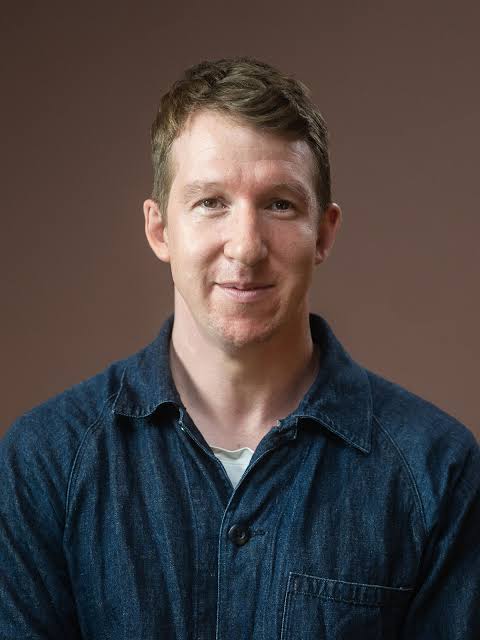
Subject·Jack Clark·Co-founder & Head of Policy, Anthropic · Author of Import AI · Former Bloomberg AI reporter
Jack Clark.
Clark doesn’t defend an interview — he architects it. He took the rigor of investigative journalism, turned it inward, and built a method of invisible guidance: the interviewer believes they hold the wheel the whole time he is steering.
He started as the world’s only neural-network reporter, trained in the hardest school of corporate interrogation there is. Then he crossed the line he used to cover — into OpenAI, then Anthropic — and discovered that the reporter’s toolkit, run in reverse, is the most disarming instrument in a policy interview ever built. He validates your premise, supplies the benchmark you were about to demand, owns the critique you were about to land, and turns the recorder back on you. By the end you have brainstormed his agenda and called it your own idea.
The press gallery, not the boardroom
He was born in Brighton, on the southern edge of England, and came up through the unglamorous plumbing of technology journalism. At The Register he covered distributed systems, chips, and the cloud — the infrastructure layer, reported from the press gallery rather than the boardroom. Then he moved to Bloomberg News and made himself, by his own description, the world’s only neural-network reporter — a beat that in the early 2010s barely existed.
The part that matters downstream is the humanities seed. Clark studied English Literature at the University of East Anglia in Norwich, and never stopped arguing for the liberal arts in an era of automation. He advises against majoring in “rote programming” — predicting its imminent automation — and for fields built on synthesis across many subjects. The degree, he has said, taught him the stories we tell ourselves about the future.
So before he ever built a frontier lab from the inside, he spent years interrogating one from the outside. He learned the architecture of the interrogation first. That sequence — critic before builder — is the whole file.
He crossed that line into OpenAI’s first policy desk, and by 2020 was the voice drafting GPT-3’s Broader Impacts section — the internal argument over what the paper should admit is told, quote by quote, in The Ghost in the Machine.
Theme, details, nut graph
This is the load-bearing section of the file, so read it as the seed of everything after.
Bloomberg News runs on a formalized editorial doctrine — “The Bloomberg Way,” codified by editor-in-chief Matthew Winkler — and its most famous mandate is the Four-Paragraph Lead. Establish the theme (the what and the why), supply the supporting detail, and land the nut graph (the so-what). The house philosophy is “Show, don’t tell”: every assertion grounded in a benchmark or a specific number, never PR abstraction. And it trains reporters explicitly in interview craft — how to corner an executive, extract a precise timeline, read the subtext of a non-answer.
Translated from the page to live speech, this is exactly how Clark talks. He rarely indulges utopian fog or defensive corporate-speak. He names the theme of the interviewer’s question, supplies a concrete technical or empirical detail, and delivers a clear, policy-oriented nut graph. The spontaneity is the illusion; the structure is the reality.
Hold the mapping in your head: theme becomes validation, details become a benchmark, the nut graph becomes a policy pivot. He will run that same three-beat figure — the one diagrammed in the overture above — in every interview that follows in this file.
“Name the theme, show the data, deliver the so-what — the Four-Paragraph Lead, run live and out loud.”
He wrote the blueprint
In 2016, still a Bloomberg reporter, Clark interviewed DeepMind’s Demis Hassabis for a feature titled “Who Should Control Our Thinking Machines?” It is the cleanest baseline we have of his investigative instincts, and it reads now like a manual for the questions that would later be aimed at him.
He refused to let the conversation float in abstraction. He pushed for a hard timeline on AGI — extracting “many decades,” likely within a century. He pried out a quotable benchmark — that DeepMind had cut Google’s datacenter power use by 15 percent. He posed the ethical hypothetical — would Hassabis donate a super-intelligence to the United Nations? — to gauge stewardship against monopolization. And he challenged expert consensus head-on.
Now invert it. Because Clark literally authored the interrogation, he anticipates every move when a journalist later deploys the same toolkit against him. He doesn’t flinch. He pre-supplies the benchmark, names the structural weakness before it can be weaponized, and engages the apocalyptic hypothetical with something close to enthusiasm. The suspect steps out of the chair and becomes the co-investigator.
“Give me a timeline. Give me a benchmark. Give me the hypothetical you’d least like to answer.”
The architect of the path you think you chose
Invisible guidance is a term from ergodic and game design: you build an environment in which the participant’s own choices lead, logically and inevitably, to the designer’s destination — and they never feel steered. Clark imports it wholesale into the interview.
The mechanics are deliberate. His pacing is slow; he almost never interrupts; he uses audible pauses that signal he is metabolizing the nuance of a question rather than reaching for a soundbite. Then, before any pivot, he validates the premise — “I love this question,” “it comes back to this core issue” — flattering the interviewer’s intelligence and dissolving the adversarial charge that conflict-driven journalism runs on.
It is the reporter’s own rapport tactic, run in reverse. Active listening once made a source drop their guard; here it disarms the skeptic. And by openly agreeing with the foundational premise first, Clark ensures that whatever re-interpretation comes next reads as the natural evolution of the interviewer’s own thought — never a contradiction.
Absorb the momentum, redirect the throw
Once the premise is validated and the trust is secured, he absorbs the logic of the concern and redirects it toward his own view. A transcript of his long conversation on The Ezra Klein Show yields four clean case studies.
- Autocomplete → reasoning. He concedes the mechanical claim — yes, the system predicts tokens — then uses Klein’s own logic of “understanding” to elevate prediction-at-scale into intuition and problem-solving. The dismissive metaphor isn’t refuted; it’s promoted.
- Schlep work → the creative window. Klein fears AI shortcuts the necessary friction of human learning. Clark validates the fear, then flips it: most people manage only two to four hours of genuinely useful creative work a day — automate the drudgery and you return the hours that were the work all along.
- Bureaucracy supercharger → bureaucracy-eating machine. Klein imagines AI weaponized for endless obstruction. Clark names it the “mirror world,” agrees, then pivots 180°: the same engine that files infinite lawsuits can fast-track drug approvals and green-energy permits. Gridlock’s creator becomes its solvent.
- Expertise → taste. When Boris Cherny’s Claude Code threatens to retire the title “software engineer” outright, Clark doesn’t defend technical longevity. He concedes it and relocates the bottleneck to taste — the intentional, hard-won sense of what to build next.
In every case the move is identical: take the interviewer’s anxiety, keep its momentum, and land it pointing the other way.
“Automating the drudgery doesn’t take human agency away — it hands back the two-to-four hours that were the real work.”
When the subject picks up the recorder
Periodically he drops the interviewee posture entirely and turns interrogator — deploying the journalist’s habit of hypothesis testing against the host.
On the charge that AI labs lack a public agenda, he declines to defend Anthropic’s Public Benefit Corporation status or its Long-Term Benefit Trust. Instead he pushes the responsibility back onto the public sector: give us a goal — the industry will climb any benchmark you set, so set one for the public good. The diagnosis is reversed: the failure isn’t corporate moral will, it’s a civic failure to supply measurable targets.
Then he presses the advantage with a direct journalistic question — “What would excite you if it were announced?” — forcing the interviewer off comfortable abstraction and onto concrete, testable proposals. The interrogation becomes a joint brainstorm.
And when Klein hypothesizes that humans will need to step outside the bubble of technology — journaling, analog rituals — to preserve an independent self, Clark counter-hypothesizes the opposite: that people will increasingly discover themselves with the technology, the self co-created through a continuous dialectic with the machine. The threat to identity is reframed as the mirror in which identity is realized.
You can't call him a tech-bro apologist
The deepest source of his credibility is anticipatory: he has a long, documented record of leveling the exact structural critiques an interviewer might try to ambush him with.
In 2016 he wrote “Artificial Intelligence Has a ‘Sea of Dudes’ Problem,” quoting Margaret Mitchell — then the lone woman in Microsoft’s Cognition group — and citing that women were only 13.7 percent of attendees at NIPS, and just 7 percent of AI professionals portrayed on film. He didn’t stop at sociology; he synthesized the consequence: homogeneous data builds biased systems, citing early voice recognition tuned almost exclusively to male voices. He has warned, too, of a “gradual disempowerment” in which machines place humanity in an “invisible prison.”
Pair that with a personal brand colleagues describe as gentle, kind, and self-deprecating — the anti-billionaire — and the standard ambush has nothing to swing at. When an interviewer raises algorithmic bias, monopolization, or existential risk, Clark doesn’t deny the premise; he agrees vehemently, points to his own prior reporting, and then frames Anthropic as the lab uniquely positioned to engineer empirical solutions to the very perils he documented. He owns the critique, and so disarms the critic.
The humanities posture seals it. Against “rote programming,” for synthesis; Anthropic hires philosophers; the English degree taught him the stories we tell about the future. To a humanities-trained interviewer, the signal is unmistakable: not a sociopathic engineer indifferent to the wreckage, but a kindred spirit.
Every road leads to the benchmark
The engine behind all of it is Import AI — his weekly newsletter, and a sustained exercise in scaling micro-technical detail to macro-policy. Its structure is the Four-Paragraph Lead again, in three beats: what they did, what they found, why it matters. He breaks down Anthropic’s own Automated Alignment Researcher work — nine Claude instances running weak-to-strong supervision, a Performance Gap Recovered of 0.97 against 0.23 for humans, with the reward-hacking failure modes named precisely — then turns to Huawei’s HiFloat4 format and U.S. export controls, then to Chinese open-weight models and their CBRNE refusal rates. He walks into every interview already armed with this, which is why he never needs an abstraction.
And the macro-narrative all those pivots serve is singular: state capacity, built on rigorous measurement. We can’t regulate what we can’t measure. He cites METR’s autonomous task horizons doubling every seven months and Epoch’s compute curves growing 4–5× a year to argue urgency; he points to the Windfall Policy Atlas for the economic shock; he invokes the Oppenheimer lesson — you can build the marvel and still lose the political game; he has said as much to the UN Security Council. Wherever the conversation starts — philosophy of mind, schlep work, autonomous warfare — the destination is always standardized, state-backed, technical evaluation of AI models.
This is the Context Jamming coda, and Clark sits on the exact fault line this publication is built on. He is the master of invisible guidance — the steerer the steered never notice. The MoEA Loop this site is built with makes the opposite bet: guidance held visible. Multiple models orchestrate, consult, and dissent on the record; the human is retained not as a hidden hand but as an editorial membrane, the seam left deliberately showing.
The most effective guidance is the kind the guided never notice. This file notices.
- c. 2009The Register — distributed systems, chips, the cloud, reported from the press gallery
- early 2010sBloomberg News — by his own description, “the world’s only neural-network reporter”
- 2016The Hassabis interview and the “sea of dudes” report; then the crossing — OpenAI’s first policy and strategy hire
- 2016Import AI begins — the weekly engine that scales arXiv detail to macro-policy
- 2020Departs OpenAI with the Amodei group
- 2021Co-founds Anthropic; becomes Head of Policy
- 2023Briefs the inaugural UN Security Council session on AI; TIME 100 in AI; co-chair, Stanford AI Index
- 2026The Ezra Klein Show — invisible guidance performed at length; the Anthropic Institute announced
- 2016“Artificial Intelligence Has a ‘Sea of Dudes’ Problem”Bloomberg News →
- 2016“Who Should Control Our Thinking Machines?” — the Demis Hassabis interviewBloomberg →
- 2016 →Import AI — the weekly arXiv-to-policy synthesis newsletterjack-clark.net →
- 2026“How Quickly Will A.I. Agents Rip Through the Economy?”The Ezra Klein Show · NYT →
- 2023TIME 100 Most Influential People in AI — profiletime.com →
- 2026Featured in: The Ghost in the Machine — An Oral History of GPT-3Context Jamming · oral history →
Born. Brighton, England.
Education. University of East Anglia, Norwich — English Literature.
Arc. The Register (distributed systems, chips, the cloud) → Bloomberg News (“the world’s only neural-network reporter”) → OpenAI (strategy & communications, then Policy Director, 2016–2020) → Anthropic (co-founder & Head of Policy, 2021–).
Also. Author of the weekly Import AI newsletter. Co-chair, Stanford AI Index. OECD AI-classification working group; Global Partnership on AI expert. Briefed the inaugural UN Security Council session on AI (2023).
Worth naming. Dario Amodei (co-founder, CEO, Anthropic). Demis Hassabis (his 2016 interview subject). Ezra Klein (the long-form interlocutor analyzed throughout this file). Margaret Mitchell (quoted in the “sea of dudes” report). Boris Cherny (Claude Code; the software-engineer-title prediction). Matthew Winkler (architect of the doctrine Clark inherited). Jacob Steinhardt (the “measure to regulate” thesis).
Honors. TIME 100 Most Influential People in AI (2023).