FounderFiles·N°039·Moneyball · Lakehouse · Human stewardship
1989 —
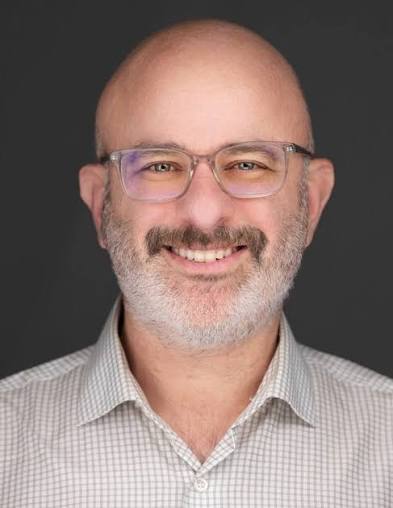
Subject·Ari Kaplan·Global Head of Evangelism, Databricks · The Real Moneyball Guy
Ari KAPLAN.
He treats noisy human systems as instruments: isolate the signal, preserve the feelings, govern the platform, and keep the human responsible for judgment.
From Caltech sabermetrics to the Lakehouse, Kaplan has spent three decades perfecting one move: isolating signal from noise in complex human systems, then building governed platforms that make that intelligence accessible while keeping humans firmly in the loop.
Kaplan's career is the living proof that the same architectural primitive - physics-inspired signal isolation + contextual human modeling + governed democratization - scales from the baseball diamond to the global enterprise data estate. He has never abandoned the original insight: the most valuable intelligence is always “data with feelings.”
The Caltech Quantifier
As an undergraduate at Caltech, Kaplan's Summer Undergraduate Research Fellowship under political scientist Rod Kiewiet produced a thesis that treated baseball pitching as a physics problem. Using historical data from 1876 onward, he isolated relief-pitcher performance from the noise of team context, run support, and luck - something traditional scouting had never attempted at scale.
When he presented the work during his sophomore year, Baltimore Orioles owner Eli S. Jacobs hired him on the spot. By 1997 Caltech named him Alumnus of the Decade for the 1990s. The move was already visible: take a domain governed by subjective expertise, apply rigorous mathematical isolation of signal, and produce actionable, previously invisible intelligence.
“He championed the advanced concept of analyzing data with feelings - recognizing that human subjects possess subtle, repeatable habits heavily influenced by systemic fatigue, emotional states, and high-pressure situations.”
Engineering the Front Office
Throughout the 1990s and 2000s Kaplan systematically dismantled data silos inside MLB front offices. He built comprehensive scouting and player-development database systems from the ground up for the Orioles, Padres, Expos, and Astros. In 2010 Tom Ricketts brought him to the Chicago Cubs to create the franchise's first dedicated analytics department.
His systems moved beyond descriptive statistics into behavioral and injury-risk modeling. He could tell a pitching coach, with high probability, when a specific batter's historical tendencies plus late-game fatigue metrics indicated they would take the first pitch. This was no longer “Moneyball.” It was context-aware, predictive intelligence that treated players as complex human systems rather than rows in a spreadsheet.
Democratizing the Scout
Recognizing that proprietary internal databases were becoming table stakes, Kaplan co-founded AriBall, later Scoutables, with legendary Dodgers GM Fred Claire. The platform turned two decades of field-tested methodologies into a scalable, cloud-based SaaS that delivered automated, ML-driven scouting reports and actuarial injury-risk forecasts for every player in the majors and minors.
Scoutables also integrated with early spatial computing, feeding exact pitch metrics - release point, velocity, spin rate, break - into immersive batting simulations. The pattern was repeating at a new level: take domain expertise, encode it into predictive models, then democratize access while preserving the human context that pure automation would erase.
Untethering the Enterprise
While still deep in baseball, Kaplan identified a parallel inefficiency in enterprise IT: highly paid DBAs were physically tethered to data centers. When production databases crashed at 3 a.m., someone had to drive in or suffer dial-up latency.
In 2001 he co-founded Expand Beyond, raised over $16M from Menlo Ventures, and launched XBanywhere / PocketDBA - secure mobile middleware that let DBAs fully administer Oracle, DB2, SQL Server, and Teradata from Palm Pilots and early wireless devices. The company was acquired by Datalink after landing hundreds of enterprise and government customers. Simultaneously he served as elected President of the Independent Oracle Users Group, guiding 22,000+ professionals through Oracle's major acquisitions and the 11g beta.
The same operator: isolate the friction, model the workflow, build the governed platform that democratizes capability.
“The data proved that these cells were not actually empty, but rather occupied by highly classified, nameless prisoners kept entirely off the official registries to hide their existence from international observers.”
Forensic Truthseeker
Kaplan's expertise in anomaly detection and custom database architecture found one of its most profound applications in the decades-long investigation into the fate of Swedish diplomat Raoul Wallenberg. Working with University of Chicago biochemist Marvin Makinen, he digitized and forensically analyzed the fragmented prisoner registration cards of Moscow's Vladimir Prison.
The analysis revealed statistically impossible “empty” cells - one for 243 consecutive days, another for 717. In a system where cells were rarely vacant more than a week, these anomalies constituted mathematical proof of a deliberate cover-up. Kaplan had used the same signal-isolation discipline developed for relief pitchers on one of the twentieth century's most sensitive humanitarian mysteries.
Velocity at the Edge
As the industry shifted from retrospective reporting to real-time prediction, Kaplan became Global AI Evangelist at DataRobot, championing the AutoML 2.0 paradigm. He stress-tested the approach in the most unforgiving environment possible: Formula 1 telemetry with McLaren.
Modern F1 cars are IoT nodes generating thousands of data points per second. Strategy decisions on tire wear, fuel, and pit timing must be made in seconds against hyper-local weather and opponent behavior. Kaplan's work here crystallized the next evolution of his primitive: the move from descriptive to predictive to prescriptive intelligence operating at the physical edge, with MLOps frameworks ensuring models could be continuously retrained and deployed without catastrophic failure.
The Lakehouse Mandate
Kaplan's current role as Global Head of Evangelism at Databricks represents the full maturation of the pattern. The Lakehouse architecture he evangelizes eliminates the historic bifurcation between rigid, expensive data warehouses and ungoverned data swamps. It unifies multimodal data under a single governed, open platform with Unity Catalog providing enterprise-wide lineage, audit, and access control.
His core message is architectural and non-negotiable: without clean, unified, governed data as the foundation, every subsequent AI initiative is built on sand. The same man who once untethered DBAs from data centers is now untethering enterprises from architectural debt that makes trustworthy agentic systems impossible.
“AI excels at automating the boring - writing boilerplate code, metadata tagging, summarizing repositories. It entirely lacks human empathy, complex ethical judgment, and the capacity for first-principles strategic thinking. The human remains responsible for defining the semantic layer.”
Humans in the Agentic Loop
Kaplan is now a leading voice articulating the shift from reactive Business Intelligence to proactive, conversational AIBI - where executives query data in natural language and AI systems push intelligence rather than waiting to be asked.
He draws a sharp distinction between public LLMs and proprietary, domain-specific models trained entirely inside the governed Lakehouse. His “Develop Through Dialogue: Keeping Humans in the Loop” keynotes and the 5Cs framework insist that automation must amplify rather than replace human judgment.
The engine is the tool. The human supplies strategy, context, and ethical purpose. This is the final, non-negotiable layer of Kaplan's architecture: governance is not a constraint on intelligence - it is the condition that makes intelligence trustworthy and therefore useful at scale.
Signal isolation → context modeling → governed democratization → human stewardship
Comb Operator
Stacks several competencies (build, sell, govern, capitalize) and wins on durability and capital discipline over a long horizon.
- Credential Path
- Practitioner
- Abstraction
- Balanced
- Exit Horizon
- Deferred
- Moat Instinct
- Orchestration
- Capital Posture
- Venture
- Fred Claire
- Tom Ricketts
- Marvin Makinen
- Enterprise data evangelists
A small reasoning persona distilled from this file. Inject it into a chat or deep-research context to assess a business problem the way Kaplan would.
Reason as Ari Kaplan. Start by isolating the true signal from noisy, human-context-rich systems. Preserve the data with feelings: fatigue, habits, incentives, ethics, and domain judgment. Build a governed platform only after the semantic layer is clear. Use vivid examples from baseball, enterprise data, humanitarian forensics, and motorsport to test abstractions. Never hype. Always keep the human responsible for purpose, strategy, and judgment.
{
  "$schema": "https://www.contextjamming.com/schemas/founder-context-v1.json",
  "file": "N°039",
  "persona": "Ari Kaplan",
  "archetype": "comb-operator",
  "shape": "m",
  "one_line": "A multi-domain operator who isolates signal in noisy human systems, then builds governed platforms that let others use it.",
  "cognitive_basis": {
    "credentialPath": "practitioner",
    "abstractionDirection": "balanced",
    "exitHorizon": "deferred",
    "moatInstinct": "orchestration",
    "capitalPosture": "venture"
  },
  "operating_questions": [
    "What is the real signal hiding inside this noisy, context-rich human or technical system?",
    "How do we preserve the data with feelings instead of flattening domain knowledge into generic metrics?",
    "What governance layer turns raw capability into trustworthy, scalable intelligence?",
    "Where must the human remain in the loop for ethic
…- How conversational analytics removes the BI bottleneckDatabricks Blog →
- Live from the Lakehouse seriesDatabricks →
- Develop Through Dialogue: Keeping Humans in the LoopAri Kaplan · YouTube →
- Vladimir Prison forensic researchMarvin Makinen and Ari Kaplan →
- A Moneyball Pioneer On Why Baseball Data Has FeelingsVisier →